How to Choose the Right Glass Partition for Your Office
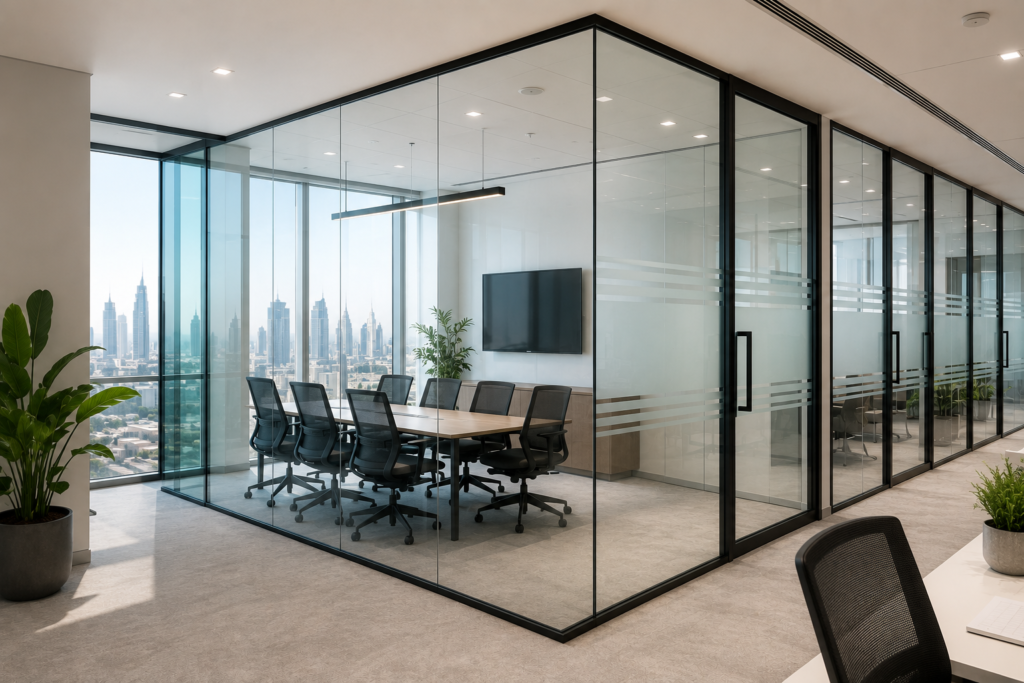
Choosing the right glass partition for your office can make a significant difference to how your workplace looks, feels and functions. The right solution can help maximise natural light, create private meeting areas and give your office a modern, professional appearance. However, not all glass partitions are the same. From frameless and framed systems to clear, frosted and double-glazed options, the best choice depends on your office layout, privacy requirements, acoustic needs and interior design. If you are planning a new office fit-out or renovating an existing workspace in Dubai, this guide will help you understand the key factors to consider when choosing an office glass partition. 1. Start With the Purpose of the Space Before choosing a glass partition, consider how the space will be used. Different areas of an office have different requirements. A meeting room may need greater acoustic and visual privacy, while a general workspace may benefit more from transparency and natural light. For example: Meeting rooms: Consider glass solutions that provide better acoustic and visual privacy. Executive offices: Frameless or premium glass systems can create a sophisticated appearance. Conference rooms: Larger glass partitions with appropriate acoustic performance may be required. Reception areas: Clear or decorative glass can create an open and welcoming first impression. Collaborative spaces: Transparent glass can maintain visual connectivity between teams. Private workspaces: Frosted or partially frosted glass can provide additional privacy. Understanding the purpose of each area will help you select a glass partition that balances functionality and design. 2. Choose Between Frameless and Framed Glass Partitions One of the first decisions is whether to choose a framed or frameless glass partition system. Frameless Glass Partitions Frameless glass partitions are popular in modern offices because of their clean and minimalist appearance. With minimal visible framing, they create a seamless look and allow maximum visibility across the workplace. They can be an excellent choice for: Executive cabins Meeting rooms Reception areas Contemporary corporate offices Premium commercial interiors Framed Glass Partitions Framed glass partitions incorporate visible aluminium or other framing systems around the glass panels. They can add architectural character to an office and work particularly well in modern, industrial or contemporary interior designs. Black-framed glass partitions, for example, can create a distinctive visual feature while clearly defining different office areas. The right choice depends largely on your preferred aesthetic, structural requirements and overall office design. 3. Consider Your Privacy Requirements Privacy is an important consideration when designing an office with glass partitions. While clear glass creates openness and transparency, it may not be suitable for every area of the workplace. For spaces that require greater visual privacy, you can consider: Fully frosted glass Partial frosting Privacy films Decorative films Tinted glass Custom patterns Company branding or logos A popular solution is to apply a frosted privacy band at eye level. This provides visual privacy while still allowing natural light to pass through the upper and lower sections of the glass. The level of privacy should be selected according to how each room will be used. 4. Think About Acoustic Privacy Visual privacy and acoustic privacy are two different considerations. A glass partition may prevent people from seeing into a room but may not necessarily provide the level of sound reduction required for confidential conversations or focused work. If acoustic performance is important, particularly for meeting rooms, executive offices or conference rooms, consider solutions designed to improve sound insulation. These may include: Thicker glass Laminated glass Double-glazed partition systems Acoustic glass solutions Properly sealed doors and frames The overall acoustic performance depends not only on the glass but also on the framing system, doors, seals and quality of installation. It is therefore important to discuss your acoustic requirements with your glass partition specialist before selecting a system. 5. Select the Right Glass Type The type of glass used in your office partition affects its appearance, safety, privacy and performance. Clear Glass Clear glass maximises visibility and natural light. It is ideal for businesses that want to create an open and connected workplace. Frosted Glass Frosted glass provides greater visual privacy while maintaining a bright environment. It is commonly used for meeting rooms, executive offices and private workspaces. Tinted Glass Tinted glass can add a distinctive design element while reducing visibility through the partition. Toughened Glass Toughened or tempered glass is widely used for office partitions because of its strength and safety characteristics. Laminated Glass Laminated glass consists of multiple layers bonded together with an interlayer. Depending on the specification, it may be considered where additional safety or acoustic performance is required. The appropriate glass type should be selected according to the intended application and technical requirements of the project. 6. Choose the Appropriate Glass Thickness Glass thickness is another important factor when planning office partitions. The appropriate thickness depends on several factors, including: Height and width of the glass panels Type of partition system Framed or frameless configuration Door design Structural requirements Acoustic requirements Safety considerations Rather than selecting glass thickness based only on appearance or price, it should be determined according to the design and technical specifications of the installation. A professional site assessment can help identify the appropriate glass specification for your office. 7. Consider Single-Glazed vs Double-Glazed Partitions Another choice businesses may need to make is between single-glazed and double-glazed partition systems. Single-glazed partitions use one layer of glass and can be suitable for offices where visual separation and natural light are the main priorities. Double-glazed systems use two layers of glass and may provide improved acoustic performance when combined with suitable framing and seals. If your office has boardrooms, executive offices or meeting rooms where confidential conversations frequently take place, it may be worth exploring higher-performance acoustic partition options. 8. Match the Partition With Your Office Interior Glass partitions should complement the overall design of your workplace. For a minimalist office, frameless clear glass can create a clean and seamless appearance. For industrial-inspired interiors, black aluminium frames can add structure and contrast. For corporate offices, customised frosting or